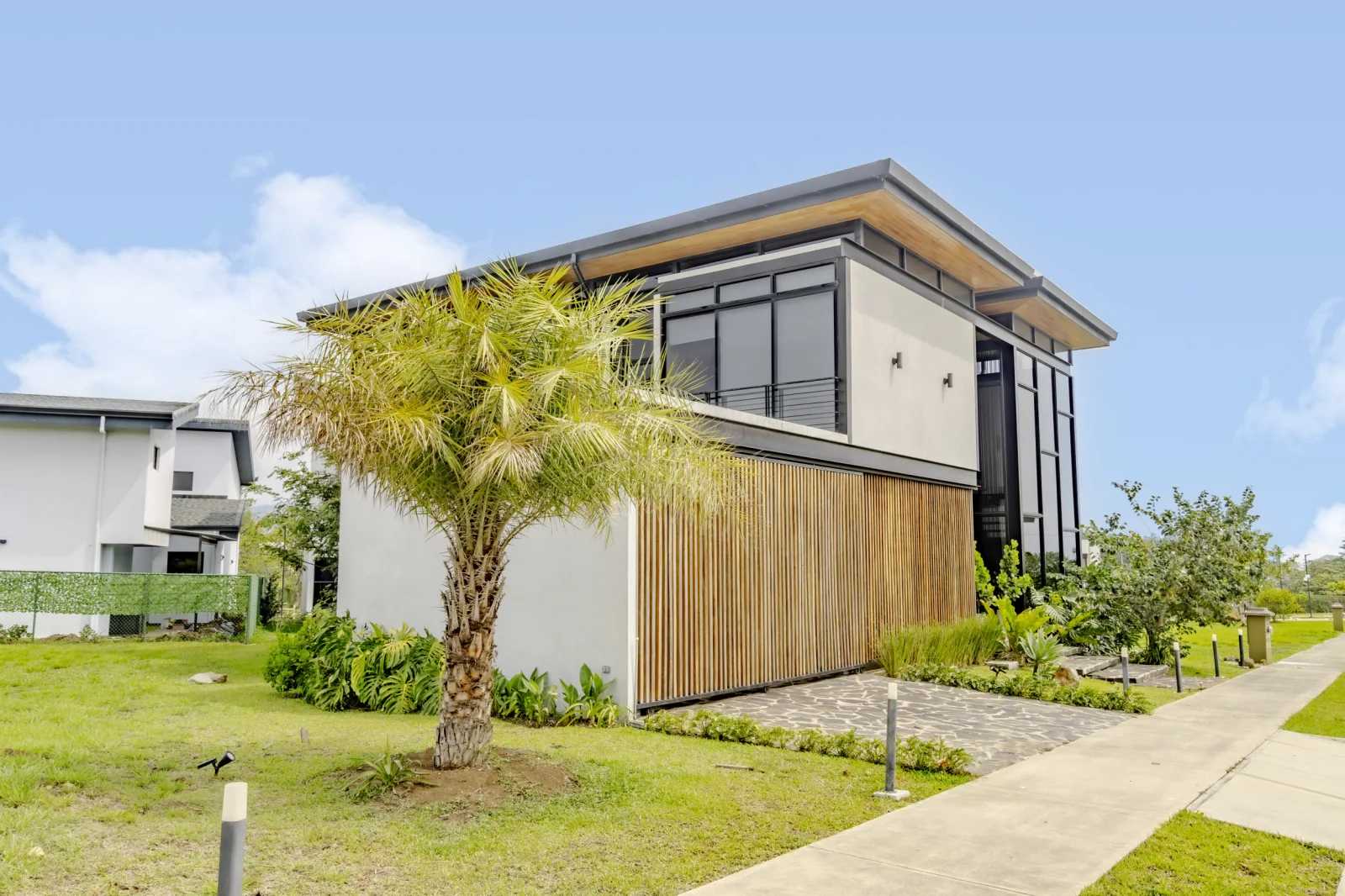
Build your own or buy a finished home? Time, cost, control and risk compared, what building involves, and which suits you.
One of the first big decisions for anyone moving to Costa Rica is whether to buy a finished home or buy land and build. Both can work. They differ in time, cost certainty, control and how much of your attention they take, and the right answer depends mostly on how soon you need to be in, how particular you are about the design, and whether you will be in the country while it happens.
In this guide, “turnkey” means a finished home you can move into: a resale home, or a new one built by a developer. We compare it with building your own on a lot you choose. The figures are indicative ranges from builders and brokers, who have their own interests, so treat them as a starting point and get written quotes.
The short answer. Buy turnkey if you want speed, a known price and the chance to inspect what you are getting; building takes much longer and costs often overrun. Build if you need a particular lot, view or design that the resale market does not offer, you can budget a margin for surprises, and you have a trusted local team. For most first-time buyers, especially those living abroad, a finished home is the lower-risk route.
Build or buy turnkey: side by side
| Factor | Buy turnkey | Build your own |
|---|---|---|
| Time to move in | Typically weeks to a few months from offer to keys, depending on legal checks and financing. | Commonly 12 to 24 months for a custom home, including design, permits and construction. |
| Price certainty | High. You agree a price for a finished, visible home. | Lower. Costs can exceed the first estimate; budget a contingency. |
| Design and lot control | Limited to what is on the market. | Full control over orientation, view, layout and finishes. |
| What you can inspect | The actual home, finished and furnished. | A plan, then a work in progress. |
| Your time and attention | Low once the purchase closes. | High: decisions, site visits, supervision and payments throughout. |
| Main risks | Hidden defects, title and boundary problems, so inspect and do legal checks. | Delays, overruns, builder performance, permit and water problems. |
| Suits | Buyers who want a rental, a quick move, or a lower-risk purchase. | Buyers with a specific vision, time and a trusted team. |
What building involves
Cost
There is no dependable single cost per square metre, because it depends on finishes, site and builder. Published ranges are broad: roughly $850 to $1,100 per square metre for standard finishes, $1,200 to $1,800 for high-end, and $2,000 and above for luxury custom work, with some turnkey builders starting higher. A steep or remote lot with no road, power or water costs more than a flat, serviced one. Professional fees for the architect, engineer and project management are commonly budgeted at about 8% to 15% of the build cost, and it is prudent to add 10% to 15% for contingencies. Construction costs have also been rising, particularly in busy areas such as Guanacaste.
Permits and approvals
The process is sequential, and each step can add time:
- Water. You need a certified water supply (carta de agua) before plans are reviewed. If you must drill a well or obtain a concession, that alone can take months and add cost.
- Professional design. The architect and engineers must be members of the Costa Rican professional association (CFIA), which reviews and registers the plans.
- Environmental review. The environmental authority (SETENA) reviews projects. Many standard residential projects are low-category, but coastal or sensitive sites can need a more detailed review and months more.
- Municipal permit. The municipality issues the construction permit after the earlier approvals.
The builder
Choose carefully. Ask to visit finished homes and speak to past clients, agree a written contract with a fixed scope, and pay in stages tied to completed work, not up front. Because contractor protections can be thin, a single accountable contract and independent supervision are worth the cost, especially if you will not be on site. We also recommend that any funds you send go through a regulated arrangement; see our escrow guide.
What buying turnkey involves
- Speed. Once you agree a price and complete the legal checks, you can have the keys in a matter of weeks to a few months, longer if you need a mortgage.
- Inspection. You can see the home, hire an independent engineer or inspector, and check roof, plumbing, electrics, water supply, drainage and any damp or termite damage.
- Legal checks. Your attorney should verify the title, liens, boundaries and permits, and confirm that what is built matches what is registered. See our guide to the risks when buying.
- Costs. Add closing costs, typically a few percent of the price, and ongoing ownership costs; see costs of buying and costs of owning. A mortgage is usually easier on a finished home with a clean title; see our bank financing guide.
A middle path
You do not have to choose between the extremes. Some buyers purchase a new home from a developer in a planned community, where the builder carries the construction risk and you choose some finishes. Others buy a resale home and renovate it, which is often quicker and more predictable than building from scratch. And some buy land first and decide later; check access, water and zoning before you do.
Which is right for you?
- Choose turnkey if you want to move in soon, you want a rental property earning quickly, you live abroad, or you prefer a known price.
- Choose to build if you have a specific lot and design in mind, you can wait a year or two, you can handle some cost uncertainty, and you have a trusted local team or can afford independent supervision.
- Either way, use an experienced Costa Rican attorney, check the title and water supply, and get everything in writing. The tax and residency implications are the same.
Frequently asked questions
How long does it take to build a house in Costa Rica?
How much does it cost to build?
Is it cheaper to build or to buy?
Can I build from abroad?
Do I need permits to build?
Talk to us before you decide
We can show you finished homes and help you compare them with what building would involve in the same area. Browse Guanacaste, Escazú and Santa Ana, or tell us what you are looking for.
Costs, timelines and permit requirements are indicative, come mainly from builders and brokers, vary by site and builder, and change; get written quotes and confirm requirements with the professional association, the environmental authority, your municipality and a Costa Rican attorney. This is general information, not legal, engineering or financial advice.